So it’s 1977 and you and your 19” color TV (not cheap so thanks parents) are looking for some in-home entertainment. Like video games. Because going to the arcades is great but costs too much and you want to play games like that NOW. You saw the ads and got the scratch together somehow and there it is — the Atari 2600 with its beautiful (to you) faux wood creation to match the basement. And get this, you can hook it up to the TV with this converter box that doesn’t get in the way of the TV antenna (or the UHF one either). And double-get this, it takes game cartridges that you can buy and which look as good as their counterparts at the arcade. Okay, that’s a total lie but as time progresses you are found standing in line at the Crazy Eddie Store in NYC’s Greenwich Village waiting to score a copy of Asteroids that better be easier to play. And between Atari and those third-party carts you can barely argue that gaming is just a “casual” thing for you anymore
So now you got game consoles and games on computers and games on phones — so what! What you want is to play those now known to be “simple” 2600 games again. But how? Introducing the Atari 2600+. Here we go.
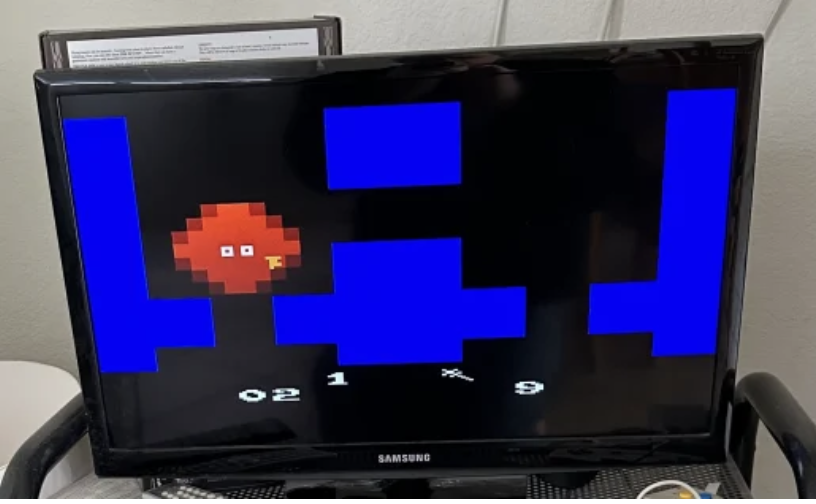
It’s The Games
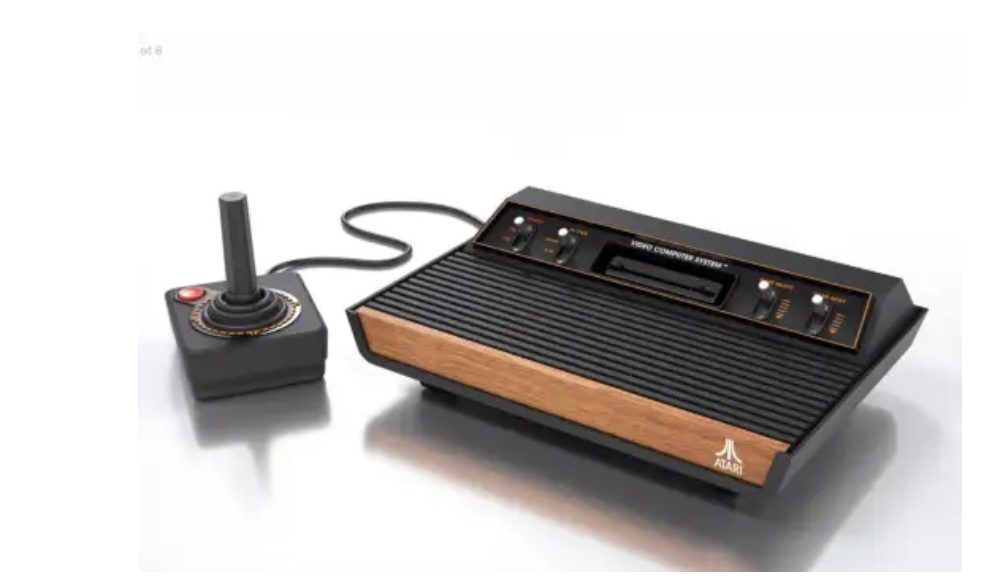
The Atari 2600+ is a fair recreation of the physical appearance and dimensions of the original – being some 80% sized of the original. So forget about the internal tech because obviously it’s been updated but you’d expect those existing cartridges not buried in some deep cavern landfill to work just fine and look and sound right — unlike some of the retro-consoles that emulate without a cartridge slot. That’s not to say every cart is going to work, because Atari is using emulation here too but at least they provide a list of their and third-party titles that will work fine (along with noting those untested and the few that just don’t want to be disturbed after 30+ years have gone by). But the 40+ carts we held onto for no good reason all love the 2600+, especially the bigger slot “mouth.”
So back to the differences: besides the physical space for inserting a cartridge being a bit larger to make for easier insertions, there’s now a lit Atari logo at th front bottom right to indicate that the power is flowing through and a game is now making an appearance. The third and main difference comes in that, as noted no TV converter box, there’s a HDMI output for sending video and audio to a modern television. That doesn’t mean the graphics are somehow higher resolution because upgraded to 720p — they’re not — but seeing the games on a large 1080p or 4K TV is kind of a hoot and the colors do look better even if the blockiness and sound can make your 21st Century brain shudder. Also if you want you can forget about using the widescreen option, in which case the output is classic 4:3 square TV box just as intended at the time and as expected by the cartridge.
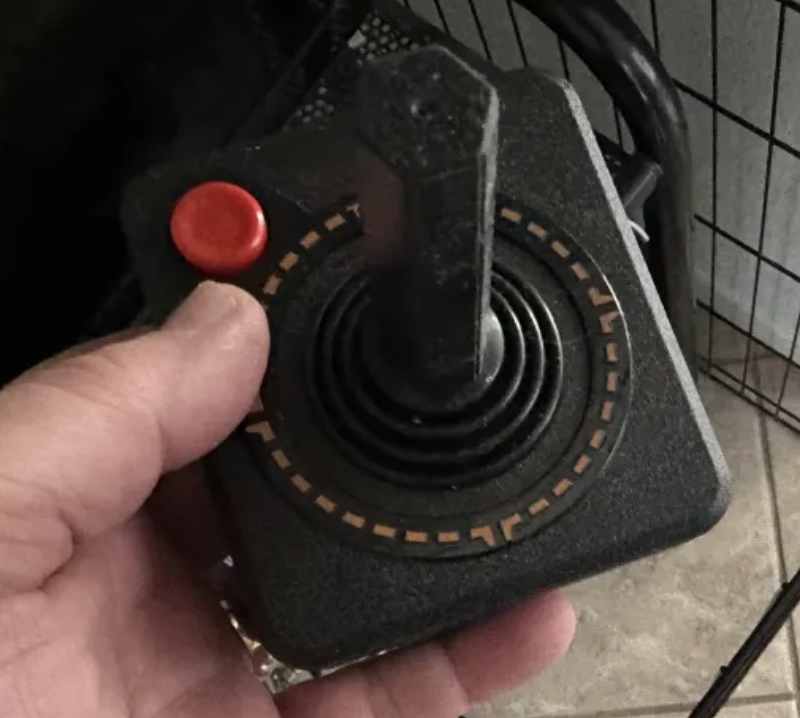
The Atari Joystick
Now the CX40+ Joystick is a recreation of the original — meaning it is basically a tall stick that moves in the four compass directions (left/right/up/down) and utilizes a single [red] firing button. Connecting is via cord so no wireless here at all. And for sure the ability to gain a callus easily and rapidly.
[Personal note: having spent too many hours rolling Missile Command around to 0 playing the 2600 at a Target back when this console was new, attesting to the callus-inducing ability of the joystick is assured] And you’d be surprised how much control and control choices this simple one-button joystick could do.
A Lot Of Cartridges To Insert
So what’s to play? Existing cartridges as noted, once you get your hands on them or new ones that Atari is now making available. Plus there’s a lot of “homebrew” titles that have been created over the years, with some of them available to buy as physical cartridges. Atari also did a number here and made the 2600+ compatible with 7800 carts — this system came later (1986) and featured backward compatibility with 2600 carts, a better joystick and much better graphics (but same sound quality as the 2600).
Atari could leave you high and dry as regards not including any games, or they could have embedded some games inside the electronics. Instead they did something a lot simpler and more playable — they included a cartridge which has 10 games in it (an easy task because 2600 games occupy so little space compared to today’s or even yesterday’s gaming world). So you can insert the cart after having worked the dip switches on the back to choose some decent (video pinball) and really good titles (Adventure, Yars’ Revenge, Missile Command) among others. That leaves a few that we don’t care about.

More On Games
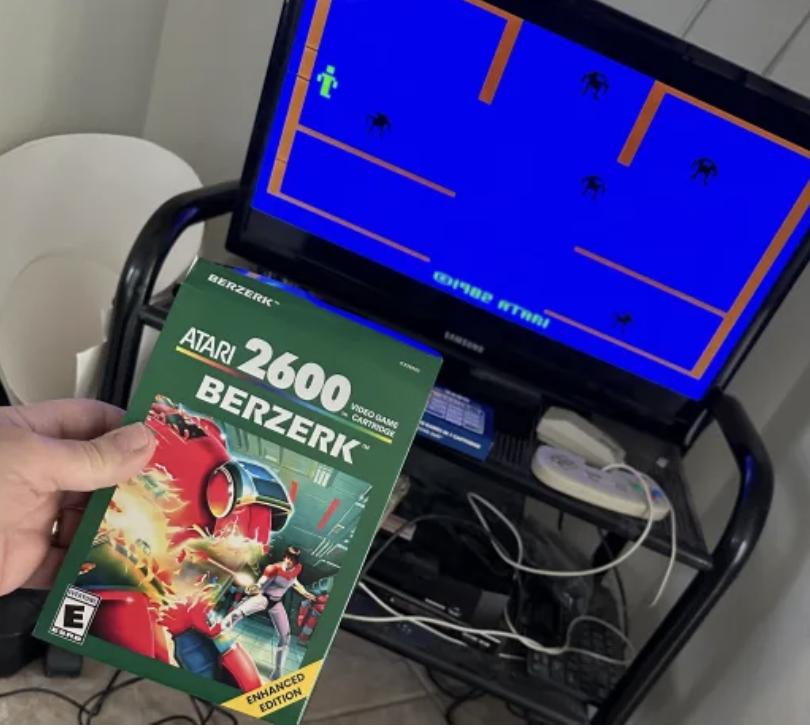
So after a bit of reminiscing with Haunted House, courtesy of the 10 in 1 cart, we popped in Battlezone and there it is in all its basic 8 bit glory — with the controller just as hard to maneuver around as one expected and the somewhat garish colors and attempts as perspective doing a fair job of imitating the arcade version. But because it jumbles the mind (not to mention the screen when getting hit), it continues the fun from the early 1980’s. But the real “joy” came with the now available to buy enhanced cartridge version of Berzerk — because as maddening as it is to take on the robots and run from Evil Otto (who can’t be killed), being able to fire at an angle makes it a lot more interesting. Not to mention the added bonus of a digital voice showing up.
And yeah it’s hard to get that angle on the joystick, but such is life. And just think of the number of cartridges that can now be popped in — those who’ve gotten the 2600+ but didn’t grab carts in advance from auction sites are going to find it a gold rush there now. For more go to http://www.atari.com